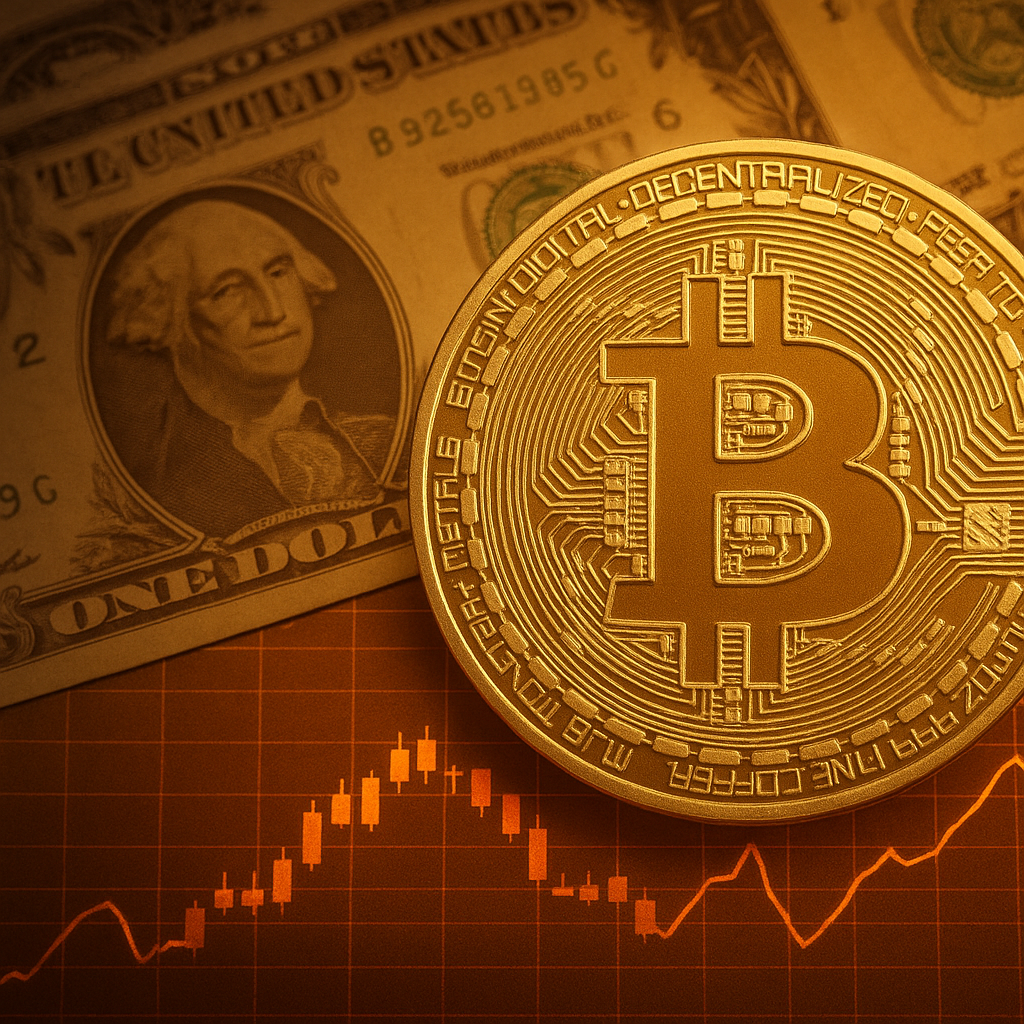
A New Type of Economic Gravity
Every financial era has its invisible force. In the 1980s, it was deregulation; in the 1990s, globalization; in the 2010s, quantitative easing. Today, that force is Bitcoin—an asset born of distrust that now shapes capital allocation, inflation dynamics, and the global strength of the U.S. dollar.
The Great Capital Siphon
During the railway booms of the 1800s, investors poured fortunes into steel and timber; in the 1920s, into autos and radios; in the 1990s, into dot-coms. Each wave diverted speculative energy from mature sectors toward a new frontier. Bitcoin is the twenty-first century’s version of that migration.
The difference: rather than building factories, it builds digital scarcity. Each dollar flowing into crypto is one less bidding up the shares of companies like 3M or Caterpillar. The liquidity doesn’t disappear—it simply crosses the digital Rubicon, where it sits inert, frozen in wallets and blockchain addresses.
This “capital siphon” is why many industrial firms today look strong on paper—solid margins, resilient demand—yet their share prices stagnate. In the 1950s, the same happened when investors shifted from railroads to electronics; in the 1980s, from manufacturing to finance. Capital always chases narrative energy, and Bitcoin currently owns that narrative.
The Quiet Drag on Inflation
When citizens of Weimar Germany or 1970s Latin America fled their currencies, they bought gold, art, or farmland—anything tangible. Today, they buy Bitcoin or dollar-pegged stablecoins. This modern flight to safety quietly reduces money velocity. Dollars that might have cycled through consumption instead sit in digital vaults.
In the U.S., analysts estimate that roughly $300–600 billion is “parked” in crypto, effectively sterilized. Even if that trims annual CPI by just 0.1–0.3 percentage points, over a decade it accumulates into real deflationary pressure—an unplanned tightening of global liquidity.
In essence, Bitcoin has become a self-imposed austerity device—something central banks used to achieve through higher rates or fiscal restraint. It’s the digital version of the gold standard, but voluntary.
The Dollar’s Digital Empire
History’s great currencies—the Venetian ducat, the British pound—thrived when trade, finance, and technology aligned around them. The U.S. dollar’s digital reincarnation is no exception. Bitcoin and stablecoins, ostensibly born to challenge fiat power, have paradoxically deepened the dollar’s reach.
In Nigeria, Argentina, and Vietnam, users don’t buy Bitcoin in local currency—they buy it in dollars. Crypto exchanges clear in USD pairs, and stablecoins like Tether are backed by U.S. Treasuries. Each transaction strengthens dollar demand abroad, keeping the greenback stubbornly high even when trade deficits say it should fall.
“The irony is profound: the technology designed to dismantle monetary hierarchy has fortified it. America’s strongest export may now be its currency’s digital shadow.”
Implications for Business and Policy
For executives, Bitcoin’s rise reframes what it means to compete for capital. The marginal investor is no longer deciding between Procter & Gamble and General Electric—but between yield and ideology, between the balance sheet and the blockchain.
For policymakers, Bitcoin is the world’s most efficient deflation machine. It absorbs liquidity, steadies inflation, and—by accident—supports the dollar’s hegemony. The same dynamic, however, makes it harder for U.S. exporters to compete as a strong dollar suppresses foreign demand.
The Paradox of Digital Deflation
Bitcoin began as a rebellion against central banks, but in function, it behaves like one. It disciplines excess, restrains inflation, and silently strengthens the dollar’s empire.
The world’s freest currency has become its most conservative force—a monetary anchor masquerading as an uprising. In doing so, it has reshaped not only finance but the very mechanics of capitalism itself.
Historical Parallels and Lessons
Economic history offers striking parallels. The 1870s gold standard limited monetary excess and anchored global prices, but at the cost of deflationary pain and sluggish growth. The 1990s Asian Financial Crisis illustrated how dollar dependency can trap economies in external imbalances.
Bitcoin merges these two patterns: a deflationary constraint built atop dollar dominance. If nineteenth-century gold was the world’s ballast, Bitcoin may be its twenty-first-century digital equivalent—anchoring trust through scarcity while amplifying the very system it sought to escape.
The question for the next decade isn’t whether Bitcoin will replace fiat—it’s whether fiat can adapt to a world where liquidity itself has a digital alternative.
About the Author
Kells Hetherington is a Certified Public Accountant and financial analyst specializing in macroeconomic linkages between capital markets and industrial equities. His work explores the intersection of corporate valuation, monetary policy, and behavioral finance.