Smurfit WestRock PLC’s third-quarter earnings may have missed Wall Street forecasts, but behind the softer numbers lies a calculated, aggressive play that could redefine the global packaging industry’s competitive landscape.
The $20 billion paper giant, forged from last year’s merger of Smurfit Kappa and WestRock, is quietly deploying its premium SBS and CUK grades to capture share traditionally held by recycled board producers such as Graphic Packaging. By offering high-specification paperboard at prices close to recycled levels, Smurfit WestRock is pressuring rivals’ margins and resetting how large consumer-packaging buyers view value.
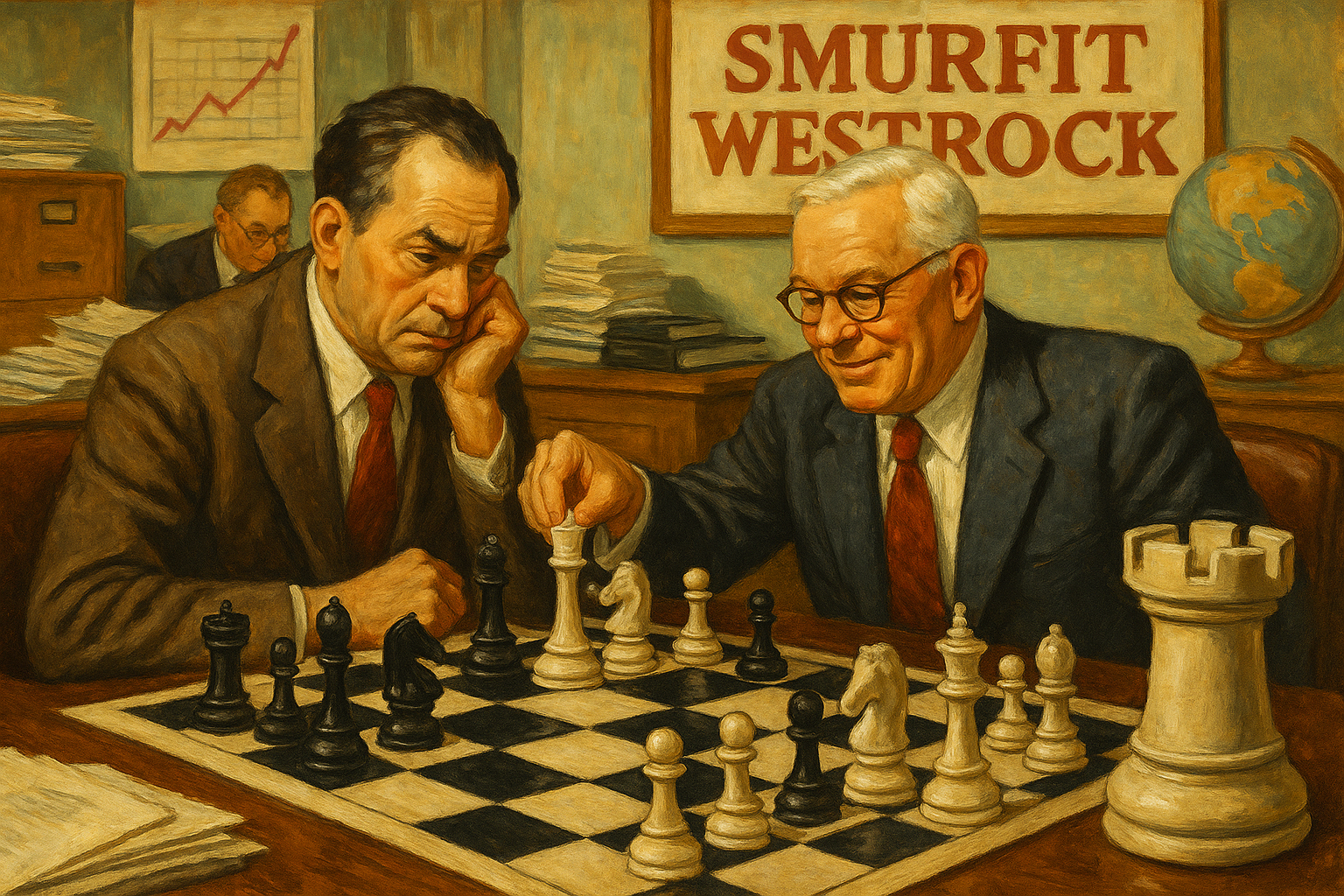
“This is a chess move, not a stumble,” said one London-based analyst. “Smurfit WestRock is using its scale, integration, and capital strength to force the market to reevaluate what ‘premium’ means—and at what price.”
Turning Strength Into Leverage
On its Q3 call, CEO Tony Smurfit and CFO Ken Bowles emphasized the company’s ongoing shift toward higher-quality, higher-margin business lines. Yet rather than retreat from slower end markets, the group is using its top-tier assets to go on offense—converting customers from coated recycled board (CRB) into coated unbleached (CUK) and solid bleached sulfate (SBS) packaging.
That strategy, while disruptive in the short term, could accelerate share gains and reshape long-term pricing power. “You can’t have it both ways,” one U.S. packaging executive noted. “Either you sit on your hands and watch recycled take share, or you use your premium grades to win it back. Smurfit chose the latter.”
The results are already visible: North America posted a 17.2% EBITDA margin, even as overall consumer volumes declined, underscoring the company’s ability to extract efficiency gains and margin from scale. Smurfit WestRock said roughly $100 million in customer business has already migrated from recycled to premium substrates since the merger.
A Costly But Strategic Squeeze
By narrowing the traditional price gap between bleached and recycled paperboard, Smurfit WestRock has forced competitors like Graphic Packaging—whose model depends on low-cost CRB—to defend market share at thinner margins. The company’s global footprint allows it to absorb temporary pricing pressure that smaller peers cannot match.
Investors initially read the move as defensive. But analysts now view it as a long-term share consolidation strategy that uses short-term pricing flexibility to expand reach across food, beverage, and consumer goods markets. “Smurfit WestRock isn’t just protecting its base,” said a Dublin fund manager. “It’s resetting the industry’s cost curve around its own assets.”
The New Market Maker
Smurfit WestRock’s $400 million synergy program and its disciplined $2.4–$2.5 billion capital investment plan for 2026 are designed to reinforce this advantage—cutting costs while expanding capacity in premium board. The company has already closed or retooled roughly 500,000 tons of legacy capacity, focusing production on its most efficient mills.
What looks like short-term margin compression could, in hindsight, prove a masterstroke: a calculated bet that premium board economics will dominate as packaging buyers shift toward sustainability, consistency, and brand presentation.
For Graphic Packaging and others, the message is clear: Smurfit WestRock is playing the long game. Its pricing may be painful for competitors today—but in redefining where the market’s “floor” sits, it’s establishing itself as the industry’s new price maker, not price taker.